Archives
- 2026-06
- 2026-05
- 2026-04
- 2026-03
- 2026-02
- 2026-01
- 2025-12
- 2025-11
- 2025-10
- 2025-09
- 2025-03
- 2025-02
- 2025-01
- 2024-12
- 2024-11
- 2024-10
- 2024-09
- 2024-08
- 2024-07
- 2024-06
- 2024-05
- 2024-04
- 2024-03
- 2024-02
- 2024-01
- 2023-12
- 2023-11
- 2023-10
- 2023-09
- 2023-08
- 2023-06
- 2023-05
- 2023-04
- 2023-03
- 2023-02
- 2023-01
- 2022-12
- 2022-11
- 2022-10
- 2022-09
- 2022-08
- 2022-07
- 2022-06
- 2022-05
- 2022-04
- 2022-03
- 2022-02
- 2022-01
- 2021-12
- 2021-11
- 2021-10
- 2021-09
- 2021-08
- 2021-07
- 2021-06
- 2021-05
- 2021-04
- 2021-03
- 2021-02
- 2021-01
- 2020-12
- 2020-11
- 2020-10
- 2020-09
- 2020-08
- 2020-07
- 2020-06
- 2020-05
- 2020-04
- 2020-03
- 2020-02
- 2020-01
- 2019-12
- 2019-11
- 2019-10
- 2019-09
- 2019-08
- 2019-07
- 2019-06
- 2019-05
- 2019-04
- 2018-07
-
br Introduction br Multiple levels
2020-06-23
Introduction Multiple levels of CK2/AKT cross-talk Isoform-specific signaling in CK2/AKT cross-talk Particularly relevant to the scope of this review, it has been shown that depletion of the CK2 catalytic α′ subunit is more effective than that of the α subunit at reducing AKT Ser129 phospho
-
br Conclusions In conclusion we
2020-06-22

Conclusions In conclusion, we identified and overexpressed DGAT2 in fast growing, oleaginous N. oceanica for the first time. The engineered N. oceanica overexpressing DGAT2 resulted in enhanced neutral lipid accumulation and altered fatty baclofen for migraine composition. Altogether, our findin
-
The preferences for source of
2020-06-22
The preferences for source of FAs for DGAT1 and DGAT2 are related to their membrane topologies, subcellular locations, interactions with other proteins or organelles (discussed in the former section), and their differential expression, substrate specificities, and enzyme kinetics. According to UniPr
-
br User knowledge representation Various representation appr
2020-06-22
User knowledge representation Various representation approaches of user interests and preferences are proposed. In this work, we advocate a multidimensional semantic approach based on Bouzghoub et al. meta-model (Bouzeghoub and Kostadinov, 2005), depicted in Fig. 6, to model the user profile. The
-
br Conclusions br Acknowledgment br Introduction The role of
2020-06-22
Conclusions Acknowledgment Introduction The role of cholesterol metabolism during multiple sclerosis (MS) is debated and the underlying physiopathology largely unknown. Dyslipidaemia is associated with worsening inflammatory activity and MS disease progression [1], [2], [3]. In the mouse mo
-
The totality of evidence from randomized clinical trials
2020-06-22
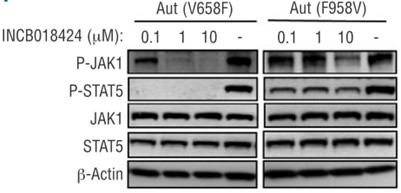
The totality of evidence from randomized clinical trials supports the premise that worsening Chelerythrine Chloride failure is a class effect of DPP-4 inhibitors. A meta-analysis by Verma et al. (54) of 100 randomized controlled clinical trials reported that the use of DPP-4 inhibitors was accompan
-
br Conflict of interest statement
2020-06-22
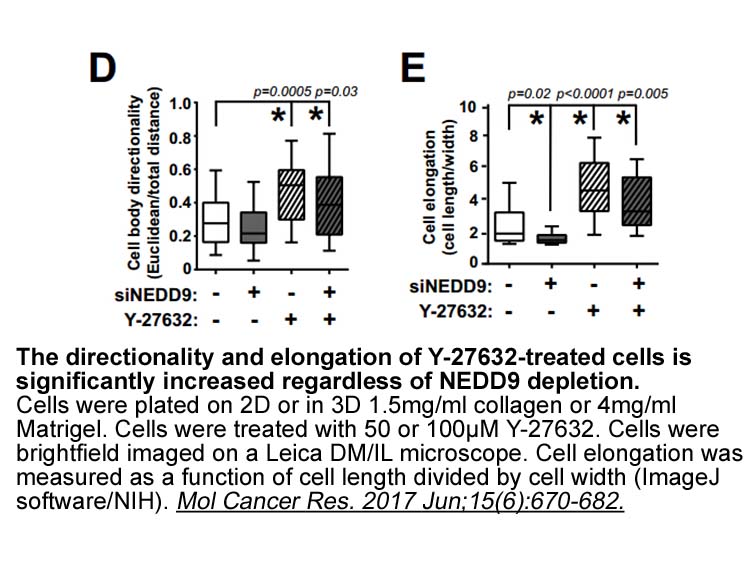
Conflict of interest statement Introduction Endothelins (ETs) are a family of multifunctional, naturally occurring peptides with long-lasting vasoconstrictor and pressor effects (Zhou et al., 2004). They are synthesized as a large protein, the pre-proET-1 or Big ET-1, which is subsequently cle
-
icrt Although CCR expression clearly identifies MBC precurso
2020-06-22
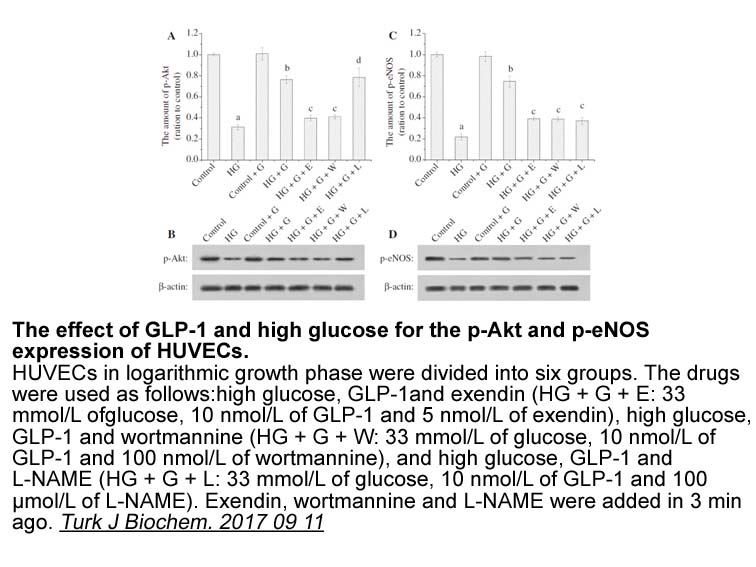
Although CCR6 expression clearly identifies MBC precursors within the GC, we found that the expression of this chemokine receptor by responding icrt was not required for MBC differentiation and had no detectable impact on the GC subsets analyzed in this study. Although this is in agreement with stu
-
We not only found that
2020-06-22
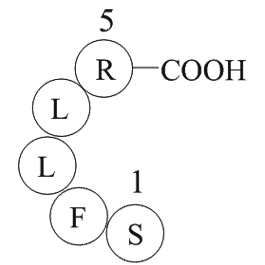
We not only found that the ISR leads to attenuation of conventional cap-dependent translation with no change in RAN translation of the G4C2 expanded repeat, but also that GA translation from the expanded repeat (but not from 5 G4C2 repeats, perhaps because the protein product does not aggregate) is
-
WES and validation by Sanger sequencing in PNGS revealed
2020-06-22

WES and validation by Sanger sequencing in PNGS-252 revealed an apparent homozygous c.4C>G missense alteration (GenBank: NM_014176.3), resulting in the amino sh4 receptor substitution p.Gln2Glu (Figure 1A). This mutation must be very rare, because this is not listed in the NHLBI Exome Sequencing Pro
-
β-Funaltrexamine hydrochloride br Conclusion The preclinical
2020-06-20
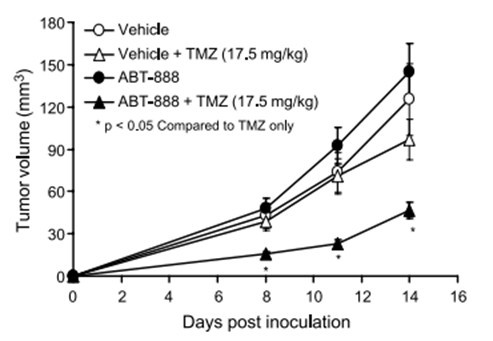
Conclusion The preclinical data reported in this study shows that LAS191859 is a potent and safe CRTh2 antagonist, with a long receptor residence time that provides a sustained in vivo efficacy. This property is reflected in the prolonged duration of action of LAS191859 in in vitro and in vivo fu
-
br Introduction Phoenixin PNX is a
2020-06-20

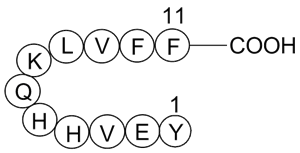
Introduction Phoenixin (PNX) is a recently discovered peptide produced mainly in hypothalamus by proteolytic cleavage of a small integral membrane protein 20 (Smim20) [1]. The most important endogenous active isoforms of PNX are amided peptides, composed of 14 and 20 NSC 66811 mg [2]. Previous da
-
Tubacin mg The importance of EBI for B cell function was fir
2020-06-20
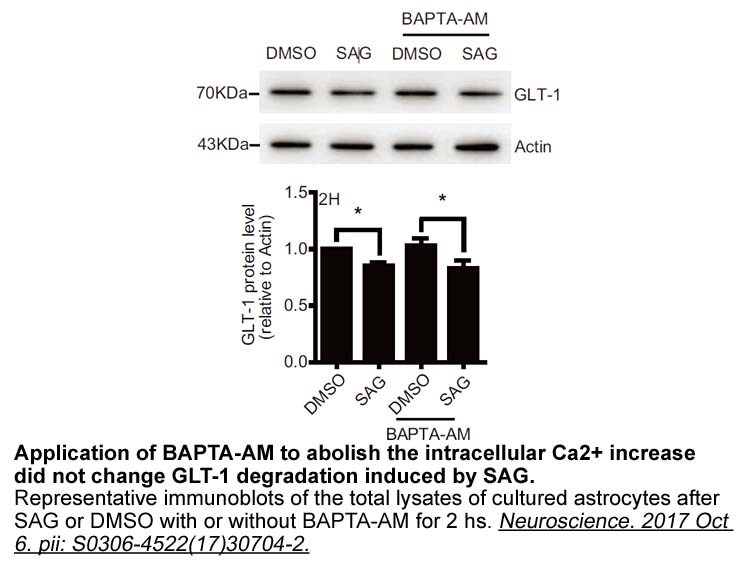
The importance of EBI2 for B cell function was first suggested by the dramatic upregulation of this receptor in EBV-transformed Tubacin mg and further inferred from its regulation in activated and GC B cells (Birkenbach et al., 1993, Glynne et al., 2000, Shaffer et al., 2000). An involvement of EBI
-
The lack of robust immunocompetent
2020-06-20

The lack of robust immunocompetent animal models permissive for HCV makes it hard to assess if the quantity and quality of vaccine-induced immunity is sufficient to confer protection. Thus, it is difficult to predict to what extent antibody responses induced by current vaccination approaches, includ
-
br Conclusion In the last
2020-06-20

Conclusion In the last year, significant advances in our understanding of ubiquitin transfer by IAPs and related E3 ligases have been made. The three crystal structures of the RING-bound E2~Ub show that the conjugate is bound by the RING domain in the closed conformation, where the I44-centered f
15792 records 825/1053 page Previous Next First page 上5页 821822823824825 下5页 Last page